URLs, News Articles and Content Blocked from Access under Article 9/A of Law No. 5651¶
Under Article 9/A of Law No. 5651, which entered into force in February 2014, applicants who allege that content on the Internet violates their privacy may apply directly to the Information and Communication Technologies Authority (“BTK”) and request only the blocking of access to that content. Where the President of BTK decides to block access, the decision is notified to the Association of Access Providers (“ESB”) for implementation. Such decisions may be issued only in respect of the publication, part, section, image or video that violates the privacy of individuals (in the form of a URL). Therefore, Article 9/A provides neither for the wholesale blocking of entire websites nor for the removal of content from publication. Where the decision is issued by the President of BTK, it must be submitted by the applicant for a judge’s approval within 24 hours, and the judgeship concerned must rule within 48 hours at the latest, the approved decision then being notified to BTK. Failing this, the access blocking measure lapses automatically pursuant to Article 9/A(5). In addition, in cases relating to a violation of the privacy of individuals where delay would be prejudicial, access blocking is implemented by the Authority directly upon the order of the President.
From its entry into force, and for roughly a decade, Article 9/A found little practical application.154 Two principal reasons account for this. First, the procedure devised by BTK for the use of this provision is unnecessarily complex.155 Although the legislature envisaged Article 9/A on the premise that violations of the privacy of individuals require “very rapid” action, BTK for a period required the relevant violation form to be delivered to the Authority by hand or by post. The form was subsequently moved onto the e-Devlet (e-Government) platform. The e-Government pages, however, do not encourage the use of Article 9/A. Indeed, those pages still state that, “instead of using this service, you may, within the scope of Article 9 of Law No. 5651, request the removal of the content from publication by way of warning, applying to the content provider of the publication or, where the content provider cannot be reached, to the hosting provider; or you may apply directly to the criminal judgeship of peace and request the removal of the content and/or the blocking of access”. Yet Article 9 of Law No. 5651 ceased to be in force on 10.10.2024.
The second reason is that, until its annulment, persons alleging a violation of their rights preferred Article 9 of Law No. 5651. Strikingly, even in the Constitutional Court’s judgments on the right to be forgotten, the high court disregarded Article 9/A and left it out of its assessment in the context of the privacy of individuals.156 As will be explained in this section, however, following the annulment of Article 9, Article 9/A began, from the final months of 2024 onwards, to feature in the decisions of the criminal judgeships of peace in a manner that commands attention. A detailed assessment of Article 9/A is accordingly included in this report.
The Legal Structure of Article 9/A and Its Constitutional Problems¶
This arrangement permits, first and foremost, the adoption of an administrative protective measure exclusively in cases where the privacy of individuals has been violated. Where such an administrative measure decision is issued, the approval of a criminal judge of peace is required. One of the fundamental ambiguities in this provision concerns the scope of the right it protects. The Law speaks of persons who allege that their privacy has been violated. Determining the scope of that right is, however, not as straightforward as it might appear, since Article 9 of the same Law, annulled by the Constitutional Court, provided a separate protection mechanism for the broader concept of “personality rights”. It follows that the categories of rights falling within the scope of the two provisions are distinct from one another. Accordingly, it is imperative to accept that only the sphere of personal intimacy falls within the scope of Article 9/A. In this context, matters falling within the right to protect and develop one’s material and spiritual existence guaranteed by Article 17 of the Constitution (including, within that framework, the right to protection of reputation), the inviolability of the domicile guaranteed by Article 21, and the confidentiality of communications guaranteed by Article 22 cannot be assessed under this provision. Only matters concerning the intimate sphere of private life falling within the scope of Article 20 of the Constitution may be assessed under this provision.
Although Article 9/A has not to date been widely used, practice has been far from uniform as regards the framework of the rights falling within its scope. In particular, in the decisions of the criminal judgeships of peace issued after 10.10.2024, the judgeships are found making assessments relating to personality rights, while establishing no connection between the content complained of, and Article 9/A. In light of the Constitutional Court’s assessments of Article 9 of Law No. 5651, it is clear that similar legal problems attach to Article 9/A of the same Law. Under Article 9/A, content owners are unable to take part in the access blocking process: without being afforded any right of defence, within hours of a request, without reasons, and without adequate examination or legal safeguards, news reports of archival character that constitute the public’s collective memory can be removed from publication indefinitely.
This demonstrates that the grounds on which the Constitutional Court annulled Article 9 hold equally for Article 9/A.157 In the absence of adequate legal safeguards, and given the exclusion of content owners from the judicial process, it is plain that the application of Article 9/A will lead to violations of fundamental rights and freedoms and will facilitate arbitrary decision-making by public authorities.
In this context, the scope of the concept of “private life” in Article 9/A of Law No. 5651 is as indeterminate as the “personality rights” formula in Article 9 of the same Law. Although Turkish law treats the right to privacy of individuals as falling among personality rights, Article 9/A of Law No. 5651 regulates the protection of that right separately. Article 9 was, however, annulled by the Constitutional Court’s decision E. 2020/76, K. 2023/172 of 11.10.2023, and the annulment entered into force on 10.10.2024.
With Article 9 of Law No. 5651 thus no longer in force, there remains no legal clarity as to which rights are protected under Article 9/A. The failure of this provision to define adequately the boundaries of the concept of “private life” gives rise, in practice, to serious conflicts between the protection of rights and the freedoms of expression and of the press.
Secondly, there is no discernible clarity as to the legal nature of the access blocking measure envisaged in Article 9/A of Law No. 5651. Whether this measure constitutes a judicial or an administrative sanction, or a protective measure of a temporary character, has not been clearly defined. In practice, however, the measure operates as a free-standing sanction, and blocked content can remain blocked indefinitely. Since no legal review or time limit is envisaged, access blocking decisions produce permanent results and lead to disproportionate interferences with the freedoms of expression and of the press.
Thirdly, the system governing the issuance and implementation of access blocking decisions under Article 9/A of Law No. 5651, like the Article 9 regime annulled by the Constitutional Court, fails to provide adequate legal safeguards against arbitrary interferences. The arrangement does not allow content owners to take part in the proceedings and affords them no opportunity to defend their rights.
Moreover, unlike Article 9, Article 9/A permits the access blocking decision to be taken and implemented directly by BTK without judicial review. This further weakens the process of legal supervision and broadens the discretion of administrative authorities.
The power to issue access blocking decisions, and to examine objections lodged against them, has been vested in the criminal judgeships of peace, bodies whose impartiality and independence have attracted criticism. In practice, the judgeships decide most requests by way of template decisions, without examining the concrete circumstances of the content, and without regard to the Constitution’s standards on freedom of expression or to the case law of the European Court of Human Rights. This renders the mechanism of judicial review ineffective and leads to serious violations of the freedoms of expression and of the press.
All of these considerations clearly demonstrate that the arrangement envisaged in Article 9/A of Law No. 5651 is indeterminate and unforeseeable in content and lacks adequate safeguards against arbitrary interferences. In this context, in four judgments against Russia concerning access blocking, the European Court of Human Rights held that the failure to afford content owners the opportunity to take part in the proceedings and to advance their own arguments amounted to a failure of the law to provide adequate safeguards against arbitrary interferences. In those judgments, the ECtHR emphasised that unilateral administrative acts implementing access blocking measures in the absence of judicial review pose serious threats to the freedoms of expression and of the press.158 These judgments establish that access blocking practices in which content owners cannot exercise their rights of defence and are excluded from the judicial process violate the freedom of expression guaranteed by Article 10 of the European Convention on Human Rights.
In conclusion, it is clear that the assessments made by the Constitutional Court in relation to Article 9 of Law No. 5651, found unconstitutional and annulled by its decision E. 2020/76, K. 2023/172 of 11.10.2023, apply with full force to Article 9/A. The arrangement in question gives rise to grave rights violations by generating legal uncertainty and arbitrary practices.
URLs, News Articles and Content Blocked from Access under Article 9/A of Law No. 5651: Assessment of 2025¶
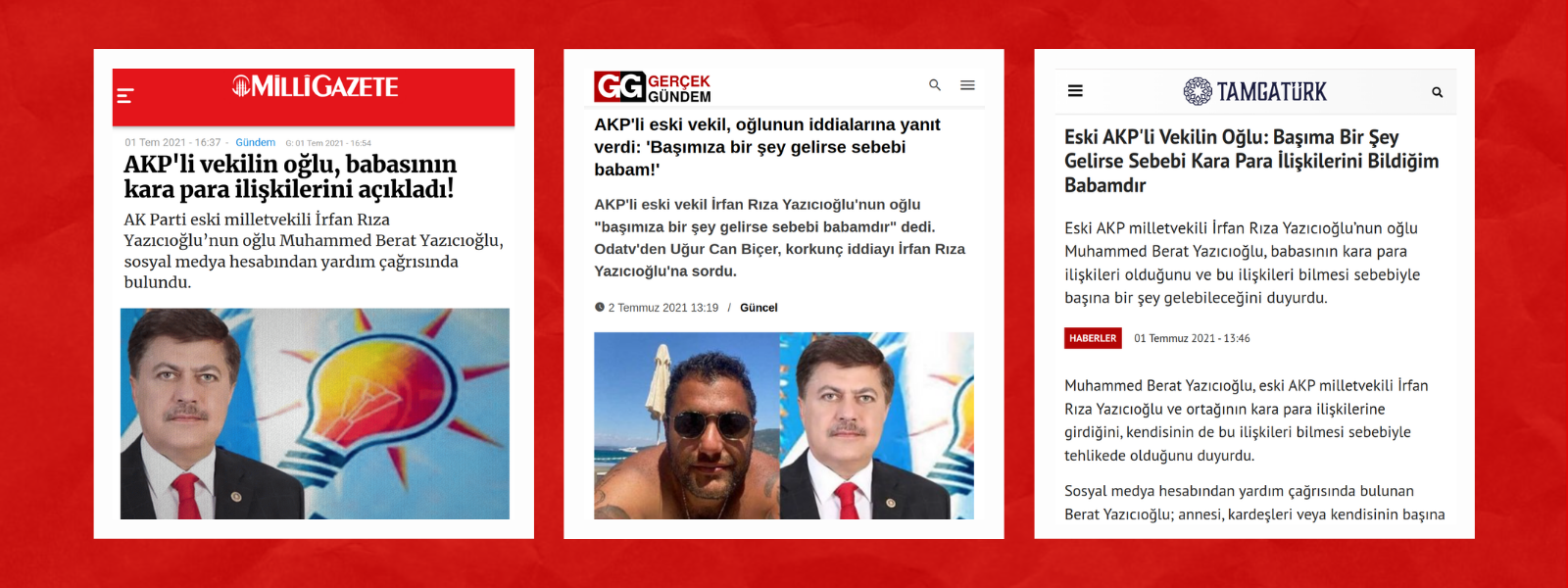
Cases in which Article 9/A was deployed as a protective shield to insulate bureaucratic and public figures from criticism increased throughout 2025. Among the notable decisions are those concerning news reports on statements by the son of İrfan Rıza Yazıcıoğlu, a former AKP Member of Parliament for Diyarbakır, to the effect that “if anything happens to us, my father is the reason”. The reports in question had previously been blocked from access, with their deletion also ordered, on the ground of “violation of personality rights” under Article 9 by the decision of the Ankara Gölbaşı Criminal Judgeship of Peace of 19.09.2024.159 Following the annulment of Article 9, the same content was blocked from access anew, this time on the allegation of “violation of the privacy of individuals”, by the decision of the Ankara Gölbaşı Criminal Judgeship of Peace of 10.01.2025.160
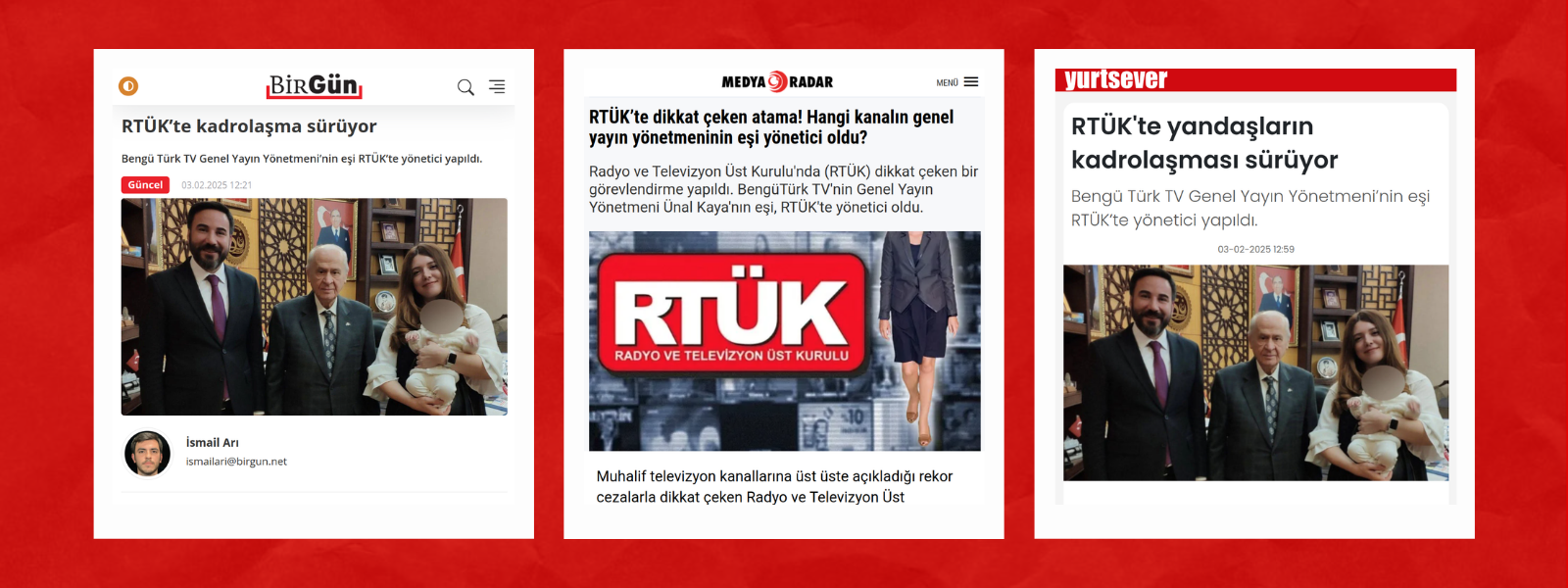
Similarly, BirGün’s report entitled “Cronyism at RTÜK continues”, concerning the appointment of Elif Kaya, the wife of Ünal Kaya, Editor-in-Chief of Bengü Türk TV (a channel known for its closeness to the MHP), to the RTÜK press advisory office, together with a total of 9 related items of content, was blocked from access on the ground of the privacy of individuals by the decision of the Ankara Gölbaşı Criminal Judgeship of Peace of 07.02.2025, which also ordered the removal of the content from publication despite the absence of any such authority in the Law.161 Upon BirGün’s objection, the Ankara 6th Criminal Judgeship of Peace, by its decision of 19.03.2025, lifted the content removal order, but the access block was maintained.162 This decision is a typical example of the suppression, under the cloak of “the privacy of individuals”, of journalistic work reporting allegations of political patronage and cronyism within public institutions. The text of the decision is largely of a template character, containing no individualised assessment whatsoever of the concrete news content. An individual application has been lodged with the Constitutional Court on behalf of BirGün.
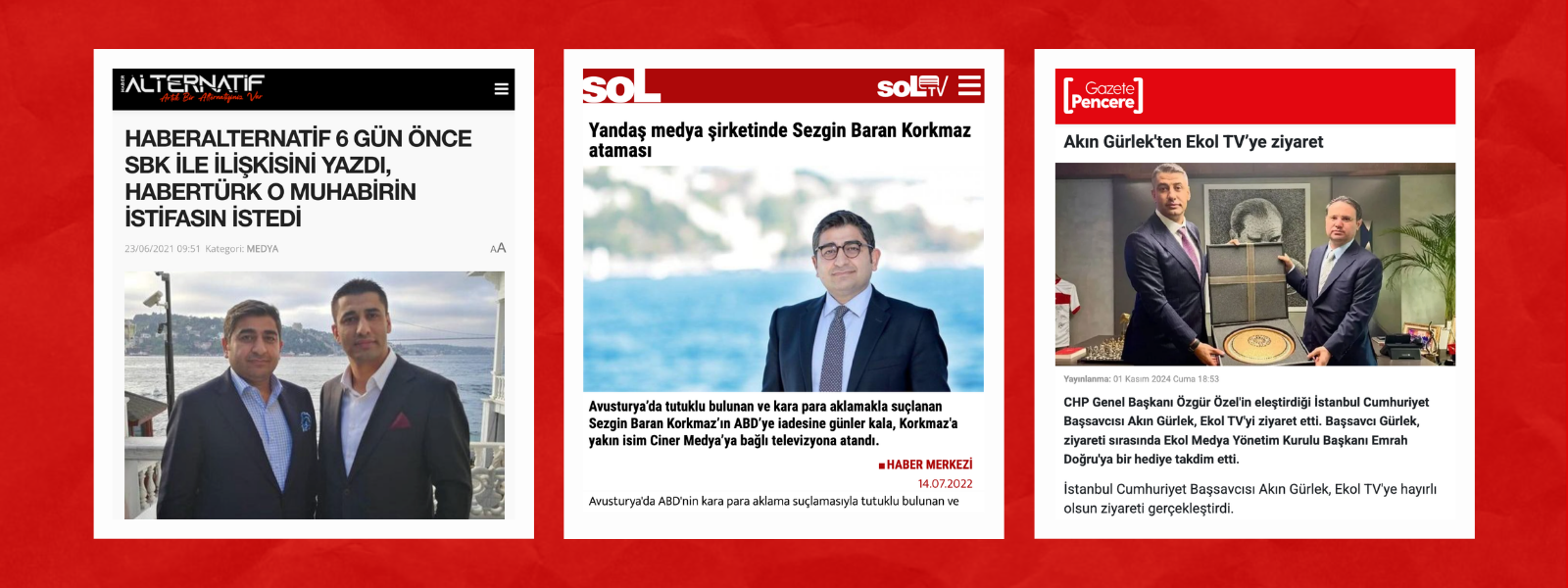
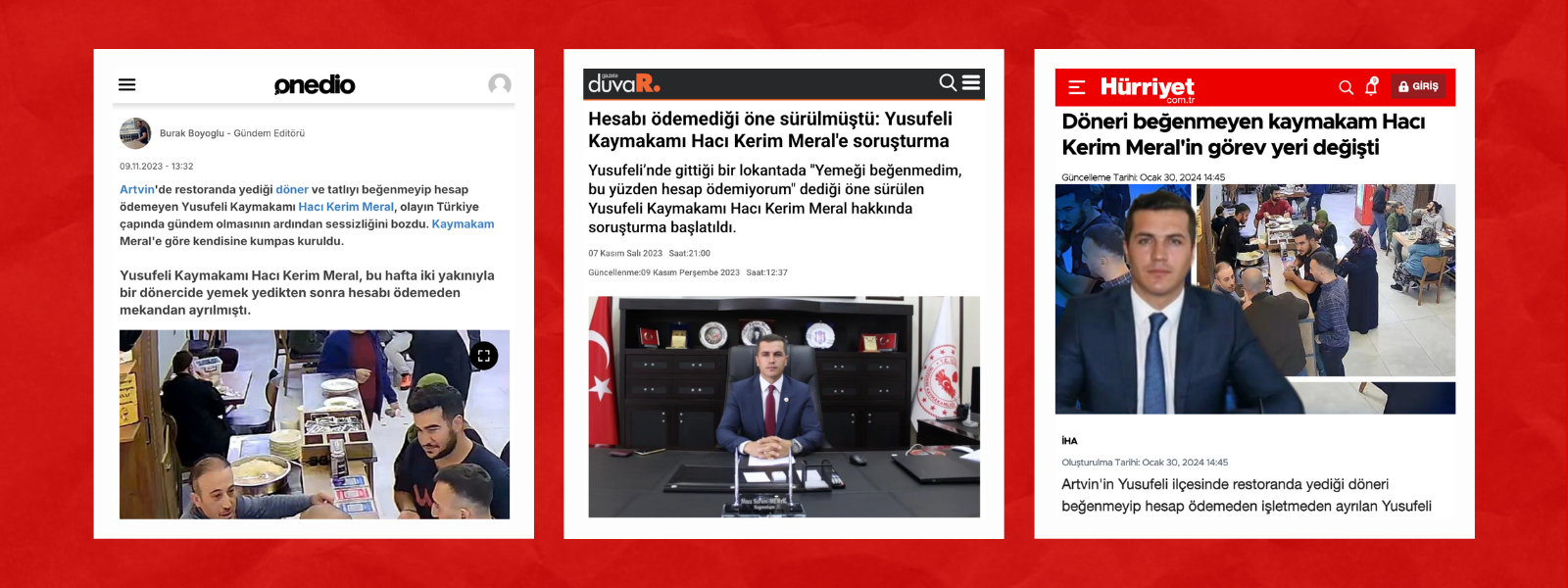
Meanwhile, news reports containing allegations about Emrah Doğru, Chairman of the Board of Ekol TV, were censored by the decision of the Istanbul 5th Criminal Judgeship of Peace of 09.05.2025,163 while reports alleging that Hacı Kerim Meral, former District Governor of Yusufeli, Artvin, had left a restaurant without paying for his meal were censored by the decision of the Hınıs Criminal Judgeship of Peace of 23.06.2025.164
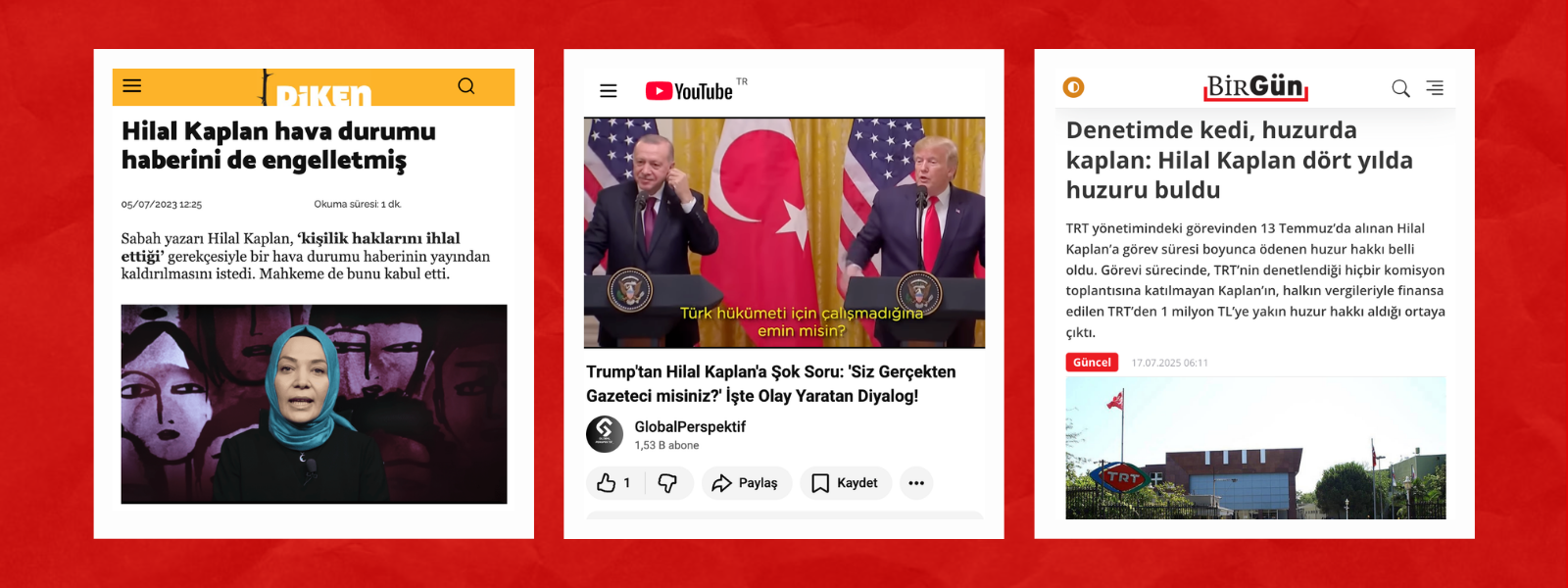
One of the gravest examples, laying bare both the mass scale that censorship has reached and the anti-democratic structure of Article 9/A, which affords content owners no right of defence whatsoever, is the decision concerning Hilal Kaplan, a columnist for the Sabah newspaper. A total of 1.509 different URLs, comprising various news reports about Kaplan, her old tweets, allegations concerning her private life, YouTube videos and social media posts, were blocked from access on the ground of the privacy of individuals by a single decision of the Istanbul 8th Criminal Judgeship of Peace.165
That decision was issued upon an objection lodged against an earlier refusal by the Istanbul 7th Criminal Judgeship of Peace, and silenced at a stroke hundreds of items of content on X (Twitter), Instagram, Ekşi Sözlük, YouTube and various news sites. Mass blockings of this kind issued under Article 9/A afford content owners no opportunity of defence whatsoever and unilaterally extinguish debates of public concern. The case confirms in the clearest terms that access blocking measures under Article 9/A lead to disproportionate interferences and that the decisions produce permanent results. The decision, given on objection, has become final; ordinary legal remedies having been exhausted, individual applications have been lodged directly with the Constitutional Court on behalf of Diken and BirGün.
Allegations reported in the press concerning Yavuz Cengiz, Chief Public Prosecutor of Çaycuma, to the effect that he had his girlfriend’s (a lawyer) former partners arbitrarily taken into custody and unlawfully obtained personal data, were blocked in a systematic and repeated manner through the use of Article 9/A of Law No. 5651. Four separate applications by the Chief Public Prosecutor to the Gebze 1st Criminal Judgeship of Peace resulted in the same news reports and content being blocked from access again and again (some of them four times).166 In particular, reports published on sites including BirGün, Pusula Gazetesi, T24, Artı Gerçek, Gazete Pencere and Kocaeli Halk Gazetesi, together with X and Instagram posts, featured in largely overlapping form in the link lists of the four decisions issued between June and December 2025.
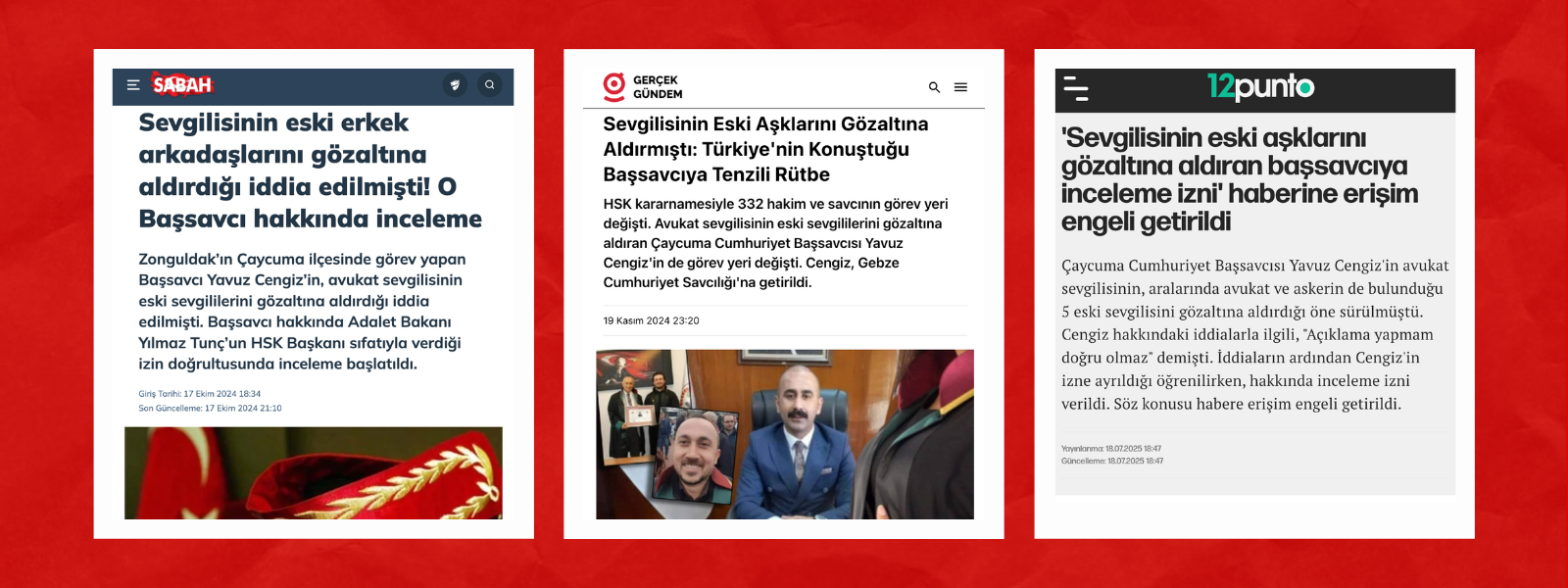
The professional activities and positions of public officials, and allegations connected with those activities, are matters of close public concern and remain within the bounds of press freedom. Nevertheless, by stepping outside the boundaries of the concept of “privacy of individuals” protected by Article 20 of the Constitution, news reports of direct public concern were blocked through the operation of Article 9/A. The high degree of overlap between the link lists of the decisions shows that the same content was sanctioned repeatedly, and that Article 9/A was used without any legal characterisation, concrete causal link or proportionality analysis. This constitutes a concrete example of the abuse of Article 9/A in substitution for the annulled former Article 9 (violation of personality rights), and blurs the scope of judicial interferences with the freedoms of expression and of the press. The collective blocking, under the heading of “private life”, of allegations of professional misconduct carrying public interest value is accordingly irreconcilable with the standards of the Constitution and of the ECtHR. These decisions stand as a concrete and striking example of the abuse of Article 9/A.
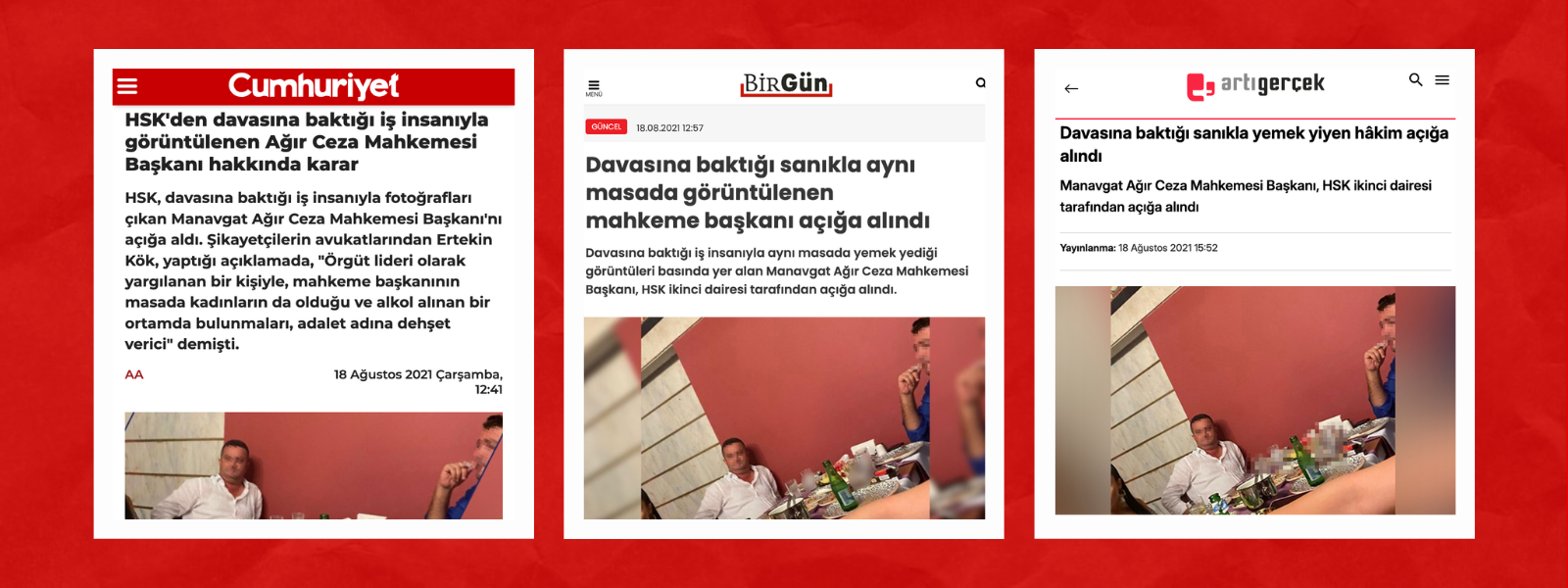
Another striking example is decision no 2025/321 of 08.05.2025 of the Hınıs Criminal Judgeship of Peace. Upon the application of Özkan İpiv, former President of the Manavgat Criminal Assize Court, news reports prompted by press photographs showing him drinking at the same table as a defendant he had tried in 2021 (a person alleged to be the leader of a criminal organisation) were blocked from access under Article 9/A of Law No. 5651, notwithstanding that four years had passed.167 By the decision, a total of 57 URL addresses, including reports published on news sites such as Artı Gerçek, BirGün, Hürriyet and Cumhuriyet as well as social media posts, were blocked from access on the ground that they were “of a nature violating the privacy of individuals”, and the removal of the content was also ordered. The decision is a typical example of the silencing, by means of Article 9/A and without regard to the passage of time or to the public interest, of old news reports of close public concern relating to the professional conduct of a judge, himself a public official.
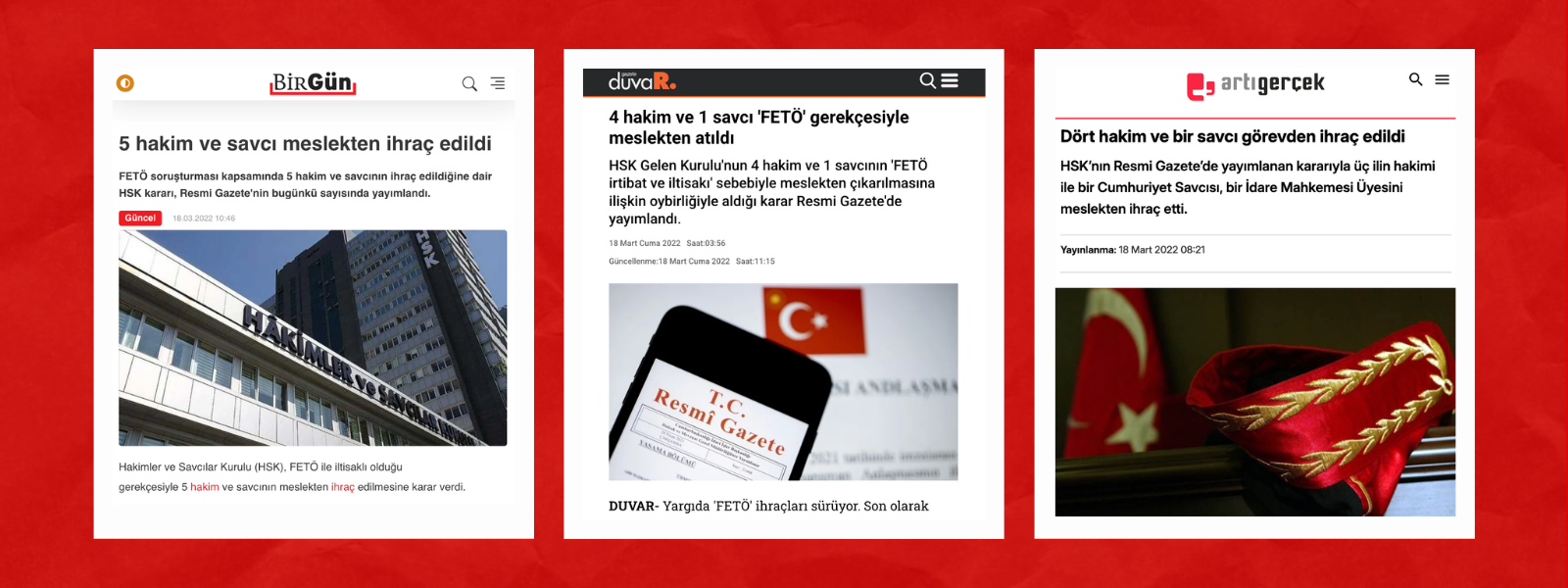
Finally, by the decision of the Kilis 1st Criminal Judgeship of Peace of 04.02.2025, upon the application of H.Y., a former judge dismissed from the profession in 2022 by the Council of Judges and Prosecutors (“HSK”) on the allegation of affiliation with FETÖ, news reports of his dismissal in which his name appeared were blocked from access under Article 9/A of Law No. 5651 on the grounds of an “attack on personality rights” and the “right to be forgotten”.168 By the decision, more than 50 URL addresses were blocked from access, including reports belonging to BirGün, Artı Gerçek, Gazete Duvar, MedyaRadar, Evrensel, NTV, Sabah and Hürriyet.
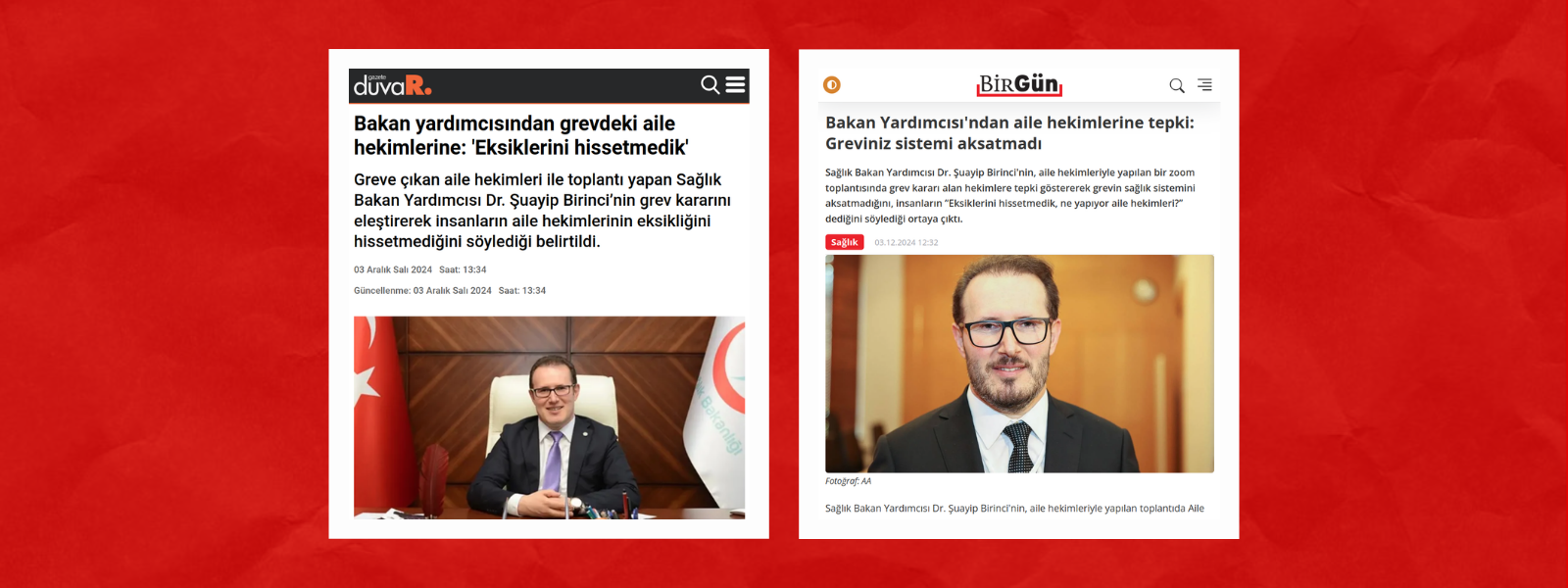
On the other hand, Pyrrhic victories, albeit exceptional, are also being secured. After news reports of a meeting at which Deputy Minister of Health Dr Şuayip Birinci criticised striking family physicians were blocked by the decision of the Ankara Gölbaşı Criminal Judgeship of Peace of 09.12.2024, Gazete Duvar and BirGün, with the support of the Freedom of Expression Association’s legal team, pursued the objection remedy. By its decision of 14.01.2025, the Ankara 2nd Criminal Judgeship of Peace set aside the censorship decision in question together with its sanctions.169 Individual gains of this kind, however, fall far short of resolving the structural problems of Article 9/A, and amount to no more than the occasional faltering, in exceptional cases, of a systematic censorship mechanism.
General Assessment¶
The data for 2025 demonstrate plainly that Article 9/A of Law No. 5651 has been instrumentalised as the de facto substitute for Article 9, annulled by the Constitutional Court. Access blocking decisions issued under the annulled Article 9 on the ground of “violation of personality rights” were, after Article 9 ceased to be in force, issued afresh for the same content through Article 9/A, this time under the heading of “violation of the privacy of individuals”. This shows that, although the legal basis of the censorship mechanism has been changed, the practice has undergone no change whatsoever in substance.
The cases examined in this section lay bare three overlapping core patterns. The first is the silencing of legitimate journalistic activity directed at the professional activities or public positions of public officials and public figures through the expansion of the concept of “private life”. Across a wide spectrum, from the Deputy Minister of Health’s statements at a public meeting to allegations of cronyism and patronage at RTÜK, and from a judge photographed at the same table as a defendant he had tried to allegations of professional misconduct by prosecutors, news reports of direct public concern were blocked from access under the cloak of “the privacy of individuals”.
The second is the systematic deficiencies in the quality of the decisions. The criminal judgeships of peace dispose of requests under Article 9/A largely by way of template decisions; mass blockings are carried out without any assessment of the content of the report, its public interest dimension, the principle of proportionality or the case law of the ECtHR. The blocking of 1.509 URLs by a single decision in the Hilal Kaplan case, and the repeated blocking of the reports concerning the Çaycuma Chief Public Prosecutor by four separate decisions, are concrete indicators of the scale this template approach has reached.
The third is the structurally one-sided character of Article 9/A, which affords content owners no right of defence whatsoever. Access blocking requests are decided without the journalists or media organisations that own the content being included in the process, while objection remedies are channelled to the criminal judgeships of peace, which form part of the same system. The principle of “the right of content owners to take part in the proceedings”, emphasised by the ECtHR in its access blocking judgments against Russia, is systematically violated in the Turkish practice of Article 9/A as well.
In conclusion, every one of the constitutional grounds on which the Constitutional Court annulled Article 9 (legal uncertainty, incompatibility with the principle of proportionality, the deprivation of content owners of the right of defence, and the absence of adequate safeguards against arbitrary practices) applies with full force to Article 9/A. The annulment of Article 9 did not dismantle the censorship mechanism; it merely changed its legal label. Article 9/A, in its current form, is incompatible with the freedoms of expression and of the press guaranteed by Articles 26 and 28 of the Constitution and with the standards under Article 10 of the ECHR.
-
A total of 214 decisions were issued under Article 9/A by the criminal judgeships of peace: 112 in 2015, 93 in 2016, and only 9 in 2017. ↩
-
Freedom of Expression Association, The Right NOT to be Forgotten on the Internet: Freedom of Expression Assessment of the Application of the Turkish Right to be Forgotten Measures under Law No. 5651 (May 2023) https://ifade.org.tr/reports/UnutulmamaHakki_2021_Eng.pdf ↩
-
Constitutional Court, E. 2020/76, K. 2023/172, 11.10.2023, § 106. See also Keskin Kalem Yayıncılık ve Ticaret A.Ş. and Others, §§ 129–131. ↩
-
OOO Flavus and Others v Russia, App nos. 12468/15, 23489/15 and 19074/16 (ECtHR, 23 June 2020) § 40; Engels v Russia, App no 61919/16 (ECtHR, 23 June 2020); Bulgakov v Russia, App no 20159/15 (ECtHR, 23 June 2020) § 35; Kharitonov v Russia, App no 10795/14 (ECtHR, 23 June 2020) § 43. ↩
-
Ankara Gölbaşı Criminal Judgeship of Peace, 19.09.2024, 2024/2916. ↩
-
Ankara Gölbaşı Criminal Judgeship of Peace, 10.01.2025, 2025/98 ↩
-
Ankara Gölbaşı Criminal Judgeship of Peace, 07.02.2025, 2025/416. ↩
-
Ankara 6th Criminal Judgeship of Peace, 19.03.2025, 2025/3401. ↩
-
Istanbul 5th Criminal Judgeship of Peace, 09.05.2025, 2025/4854. ↩
-
Hınıs Criminal Judgeship of Peace, 23.06.2025, 2025/320. ↩
-
Istanbul 8th Criminal Judgeship of Peace, 13.11.2025, 2025/11603. ↩
-
Gebze 1st Criminal Judgeship of Peace, 20.06.2025, 2025/2716; Gebze 1st Criminal Judgeship of Peace, 26.06.2025, 2025/2837; Gebze 1st Criminal Judgeship of Peace, 10.12.2025, 2025/5340; Gebze 1st Criminal Judgeship of Peace, 18.12.2025, 2025/5546. ↩
-
Hınıs Criminal Judgeship of Peace, 08.05.2025, 2025/321. ↩
-
Kilis 1st Criminal Judgeship of Peace, 04.02.2025, 2025/639. ↩
-
Ankara 2nd Criminal Judgeship of Peace, 14.01.2025, 2025/654. ↩